

Prior knowledge
- Intermediate knowledge of Docker.
- Basic familiarity with Linux systems (no need to be an expert).
- Basic use of a text editor (
vi,vim, or alternatives likenano).
Content of the book
Stop paying for idle clusters. Master Kubernetes v1.35+ locally.
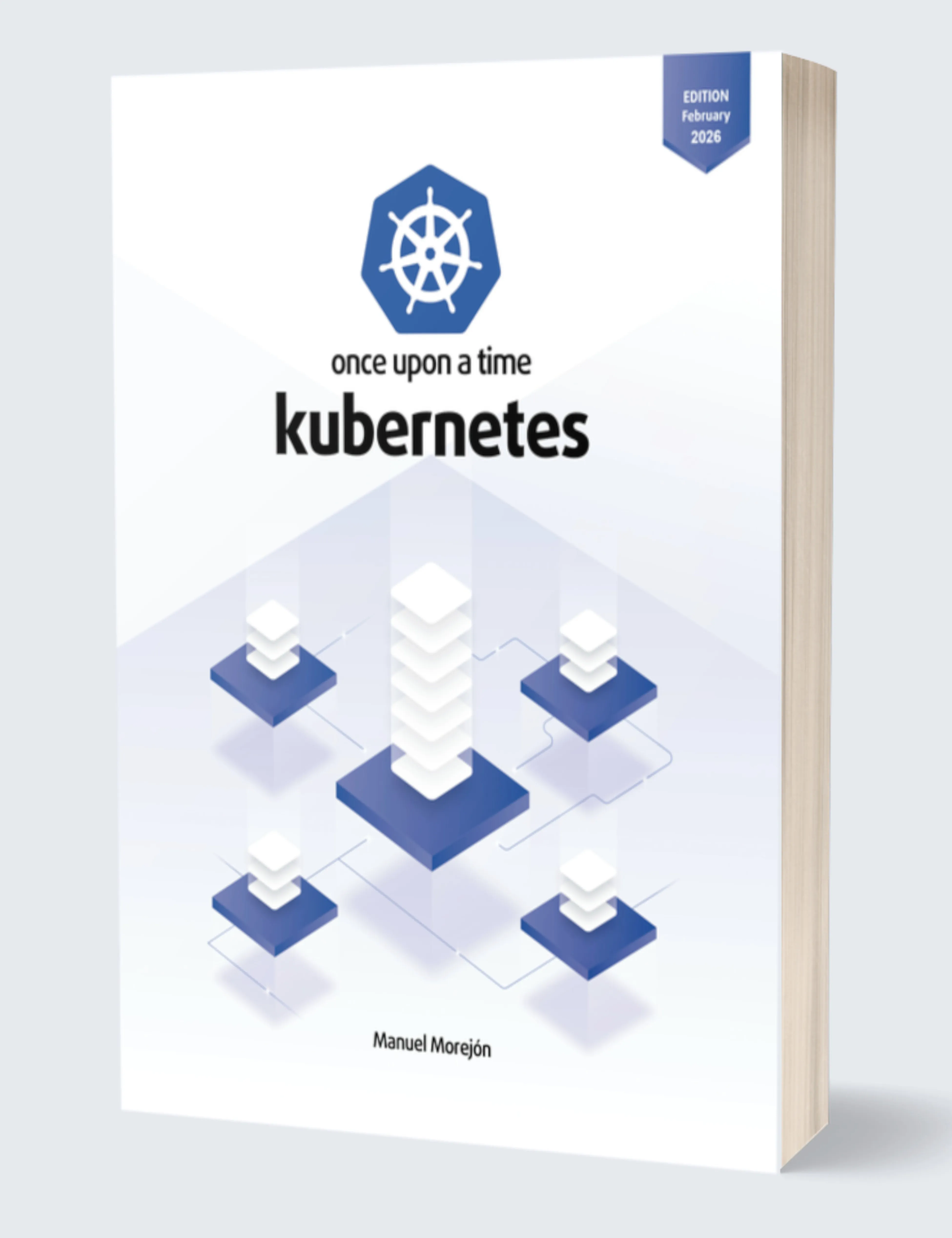
Are you tired of “Hello World” tutorials that don’t survive in Production? Do you want to learn Kubernetes without expecting a surprise bill from AWS or Google Cloud at the end of the month? Once upon a time Kubernetes is not just a reading book; it is a battle manual designed for Engineers, Developers, and SysAdmins who want to move from “playing” with Kubernetes to truly understanding it.
This book is the English translation of Érase una vez Kubernetes, originally written in Spanish.
The “Local-First” approach
Forget about obsolete Minikube or heavy virtual machines. In this book you will master Kind (Kubernetes in Docker) to deploy full multi-node clusters directly on your laptop. Your learning environment includes:
- Multi-node cluster: Simulate a real production environment with control-plane and workers.
- Real networking: Implement MetalLB to simulate real Load Balancers on your PC.
- Ingress & Gateway API: Master modern traffic entry points.
- Persistence: Manage volumes (PV/PVC) that survive restarts.
The repository for the English edition is at GitHub.
Learning path (from zero to hero)
The content is structured to take you from fundamentals to advanced concepts using Kubernetes v1.35+:
- Cloud Native architecture: Pods, ReplicaSets, and Deployments.
- Configuration management: ConfigMaps, Secrets, and security best practices.
- Security: RBAC (Role-Based Access Control) and ServiceAccounts.
- Resources: CPU/RAM limits and Autoscaling (HPA).
- Real world: How to translate what you learned locally to the cloud (AWS, Google Cloud, DigitalOcean).
Why this book?
- Updated for 2026: Covers Kubernetes v1.35.
- Cost-efficient: You don’t need a cloud account. Your laptop is your data center.
- Hands-on: Includes access to a GitHub repository with all the YAML manifests and scripts.
- Kubexercises: Includes a self-assessment tool to test your knowledge after each chapter.
Join the community
Use GitHub Discussions to interact with other readers and the author. Ask questions about the exercises, share your progress, suggest improvements to the book or the labs, and help others. It is the main place to stay in touch with the community around Once upon a time Kubernetes.
Start deploying your first cluster in 40 seconds. Grab your copy and level up your DevOps career.


